The tropes
We solve the tropes.
High-quality AI content, not AI slop. Prompt-to-image battlemaps fail in the same six ways, over and over, because raw generation has no idea what a floor plan is. Here's the taxonomy, and what a blueprint does differently at each point of failure.
Trope 01
Melted room boundaries
What it looks like
Walls that bow, blur, or dissolve straight into the floor. Door frames floating in open air where a wall should be. Two rooms that share a border in the prompt end up sharing a border in name only.
Why it happens
A diffusion model paints the whole canvas as one continuous image, with soft attention spread across every pixel. It has no concept of "this rectangle is a room" unless something outside the prompt enforces one — left to itself, it blends.
How the blueprint stops it
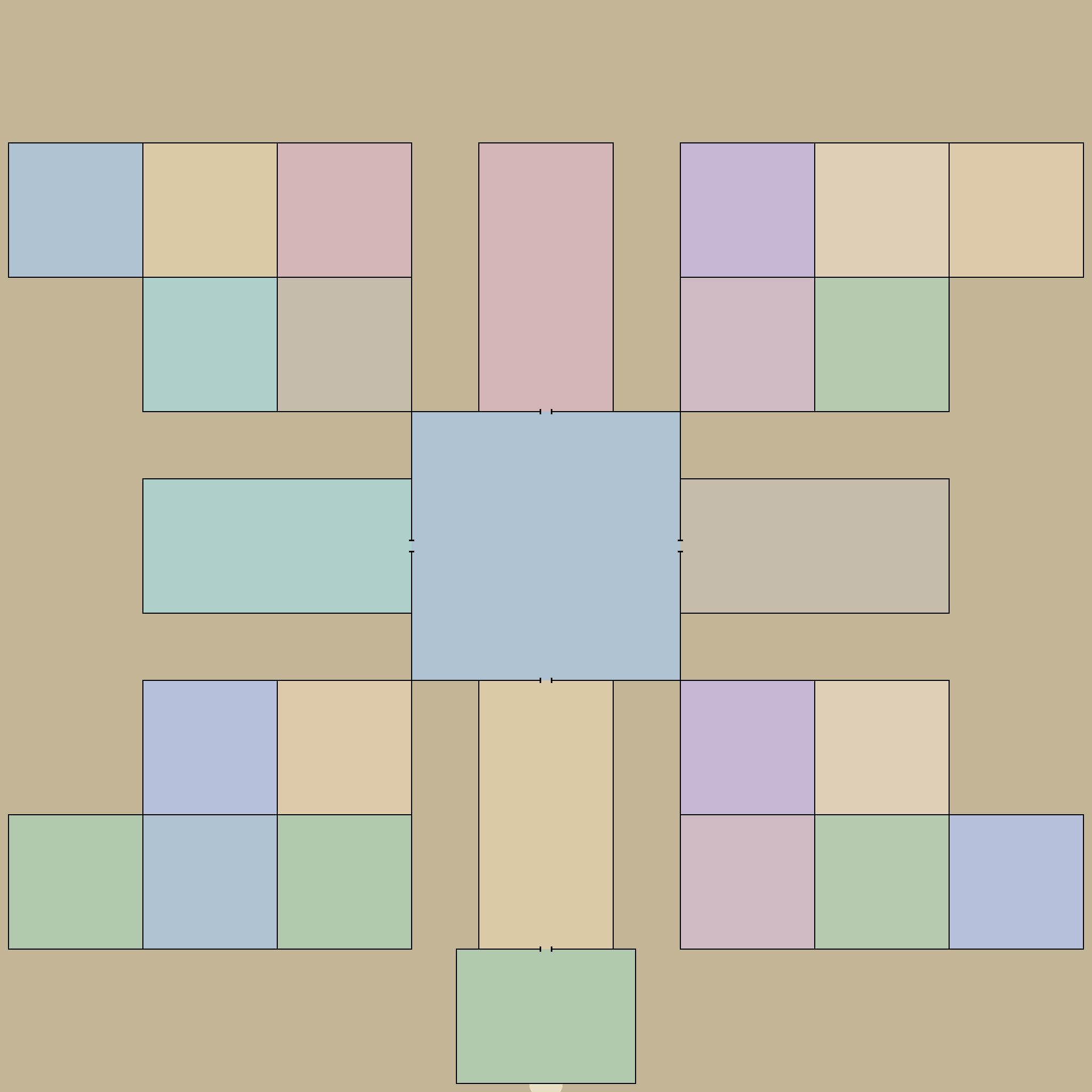
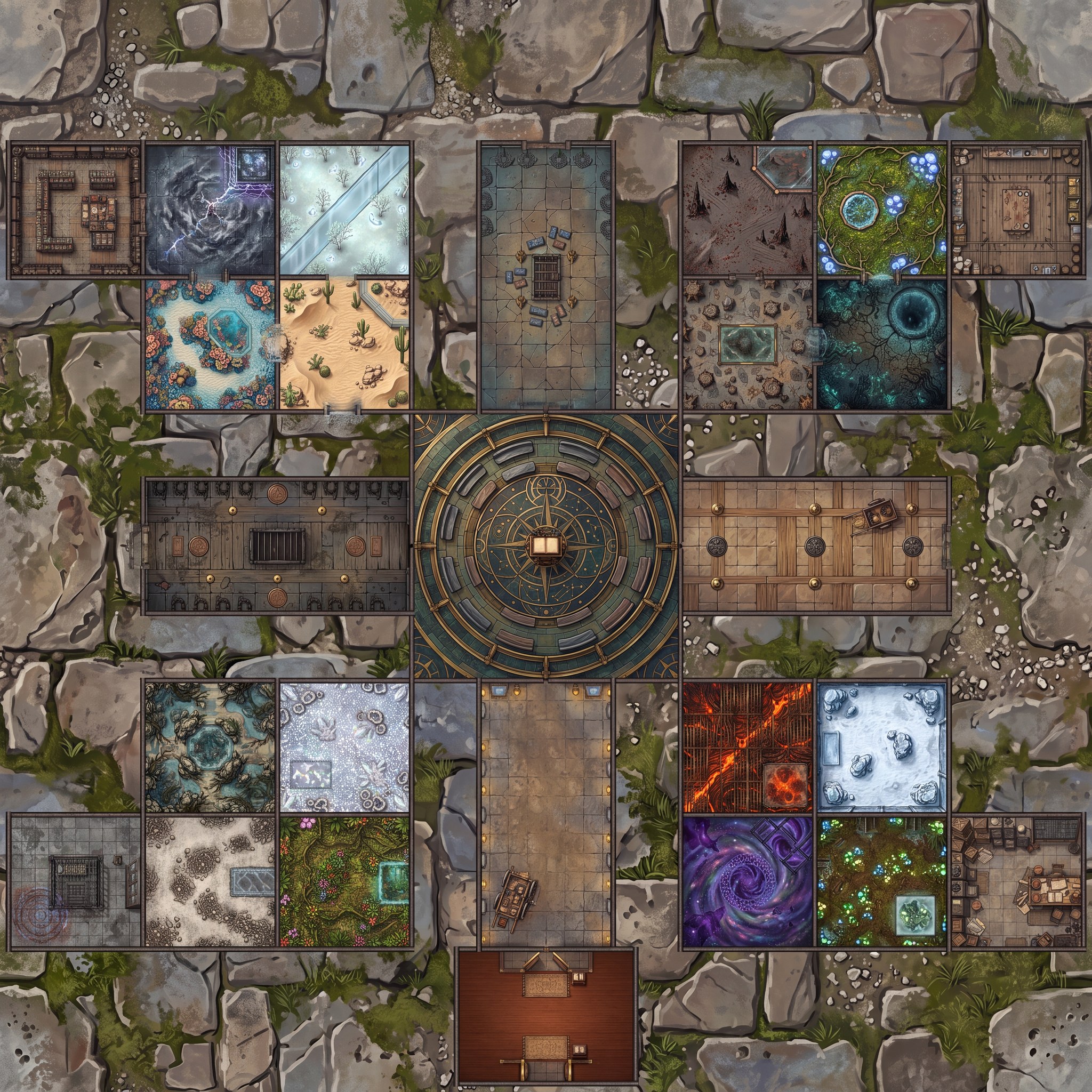
Every region in a RealmCast blueprint is an explicit polygon on a fixed grid, locked before the paint step ever runs. The render engine paints inside a region's footprint, not “a room, roughly here.” Sixteen habitat cells stay sixteen distinct rectangles, however the paint style changes.
Trope 02
Doors that go nowhere
What it looks like
A handsome door painted into a blank wall. A corridor that dead-ends for no reason. Stairs leading to a second floor the building doesn’t have.
Why it happens
To an image model, a door is a motif, not a passage. It paints one because the room "looks right" with a door in it — with no awareness of, or interest in, what’s supposed to be on the other side.
How the blueprint stops it
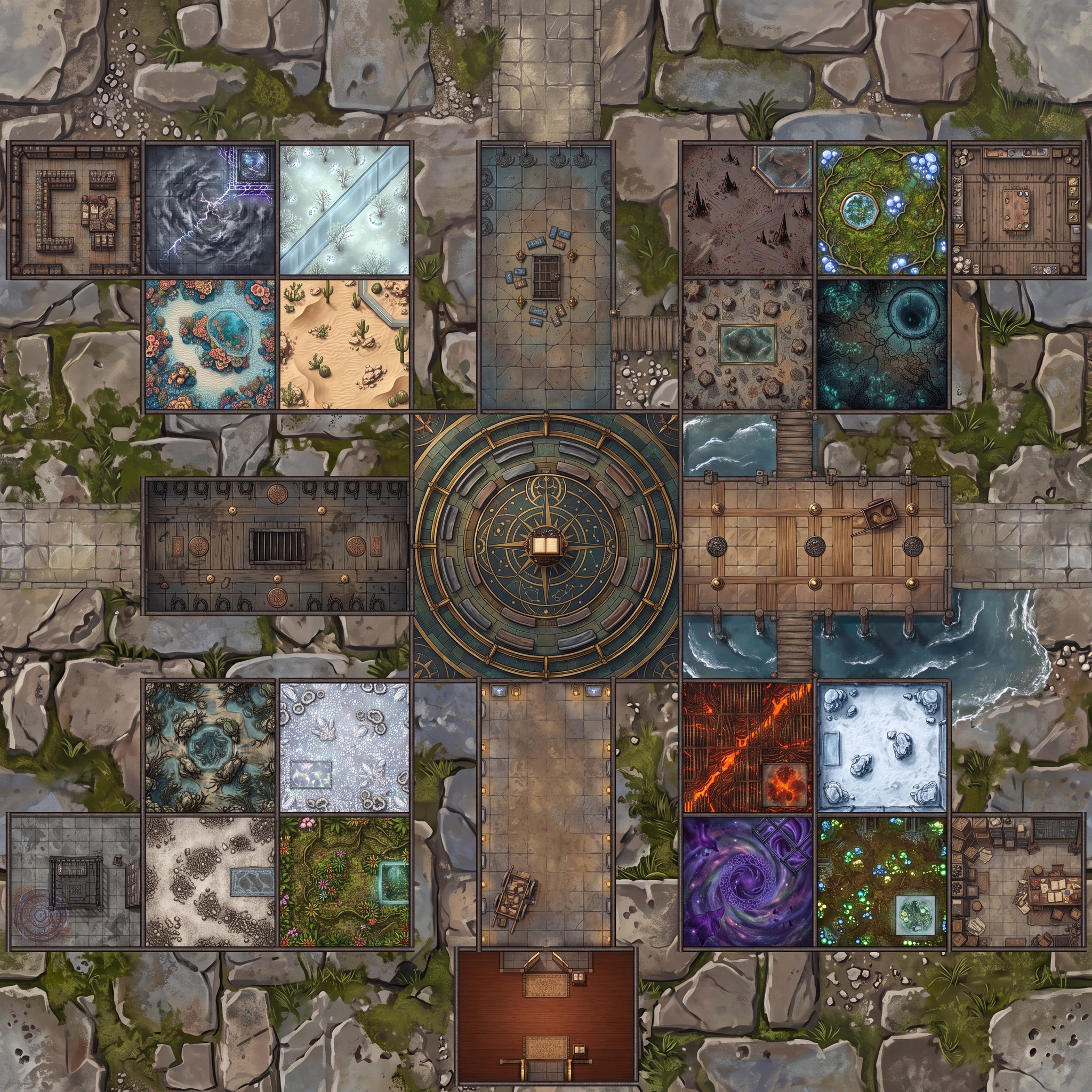
Every opening that gets rendered traces back to an edge in the blueprint’s connection graph — a from-region, a to-region, and a description of the door itself. No graph edge, no opening. The Grand Menagerie blueprint carries thirty-three such connections; the render honors all of them and invents none.
Trope 03
Decorative grid at the wrong scale
What it looks like
A "five-foot" grid that a human-sized bed needs three squares to fill. Grid lines that quietly change size halfway across one map.
Why it happens
The grid overlay is usually a stylistic afterthought, painted on after the image, unrelated to how many actual feet the room measures.
How the blueprint stops it
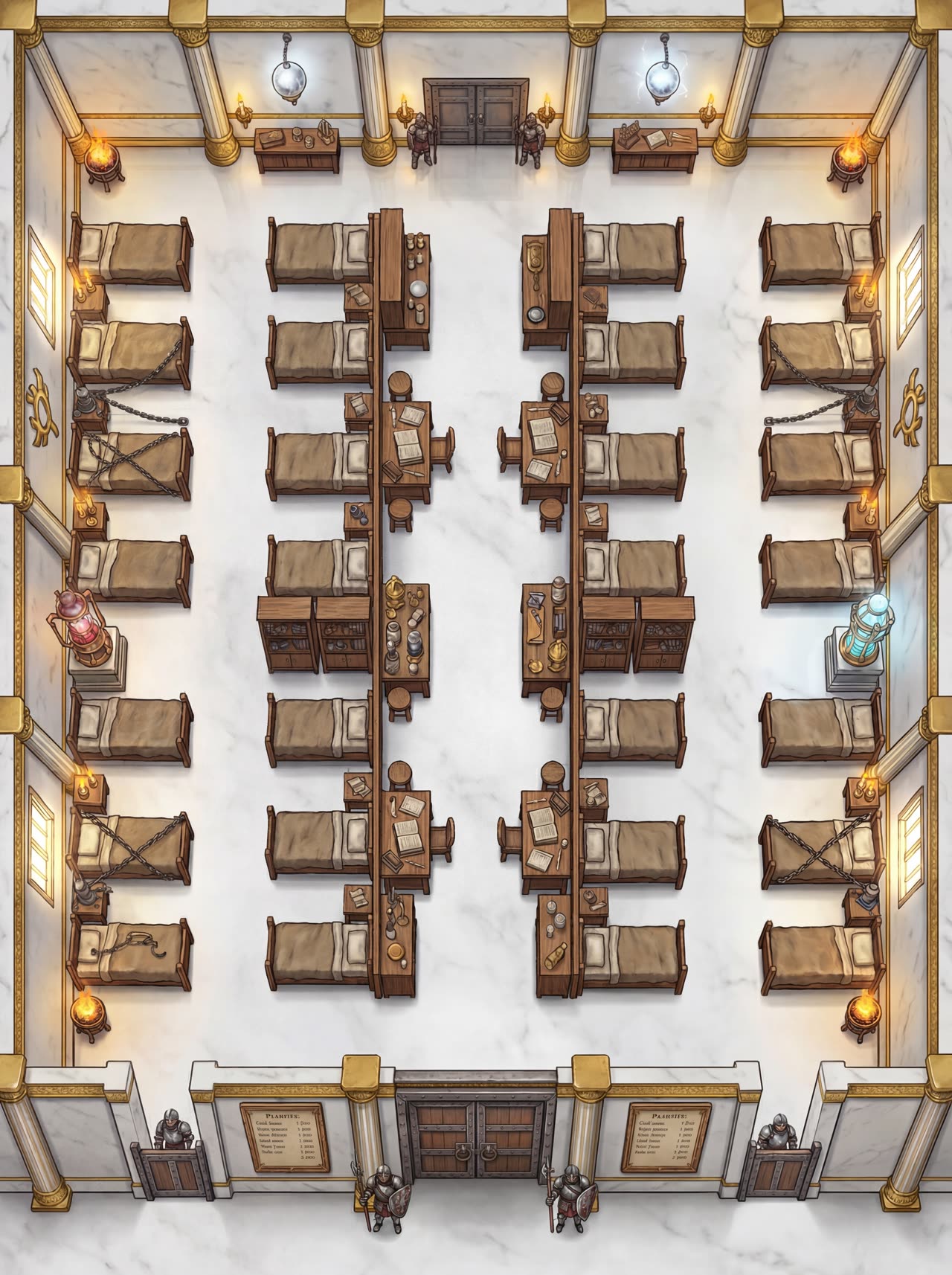
A RealmCast blueprint states its canvas in feet from the start — columns, rows, and feet per cell. The same feet size the furniture, the door widths, and the grid overlay, so a bed reads as roughly four by six feet because it is four by six feet, on a grid that means what it says.
Trope 04
One texture soup
What it looks like
Every floor in a twenty-room dungeon is the same weathered flagstone. Kitchen, crypt, and corridor, rendered in one material because the model picked a favorite and stuck with it.
Why it happens
A single global prompt describes the whole map at once, and an image model defaults to one dominant material across the frame because that’s what keeps the picture visually coherent to it.
How the blueprint stops it
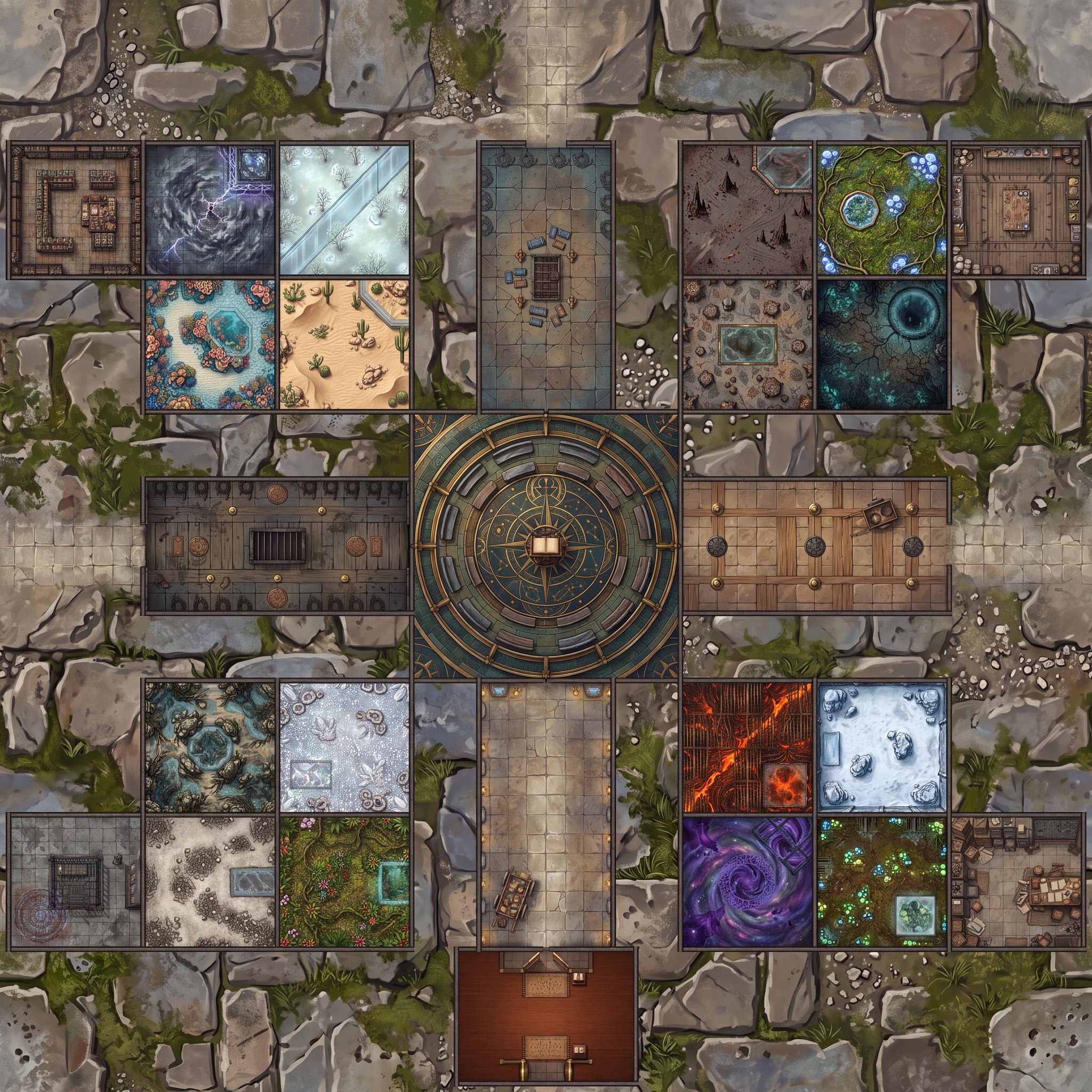
Each region in a blueprint carries its own mood and contents, which drives its own material. The Grand Menagerie’s sixteen habitat cells render sixteen different floors — ember rock, tundra frost, coral tide-pool, bone dust, fey moss — from a single blueprint, because each region says what it is before the paint step touches it.
Trope 05
Cartographic drift
What it looks like
Ask for a tactical battlemap, get a regional map, a parchment world atlas, or an isometric city skyline instead of a top-down, room-scale floor plan.
Why it happens
"Map" is an overloaded word in an image model’s training data. Without an explicit scale contract, generation drifts toward whatever "map" imagery dominates that training — usually decorative world maps — because the model is completing a picture, not measuring a room.
How the blueprint stops it
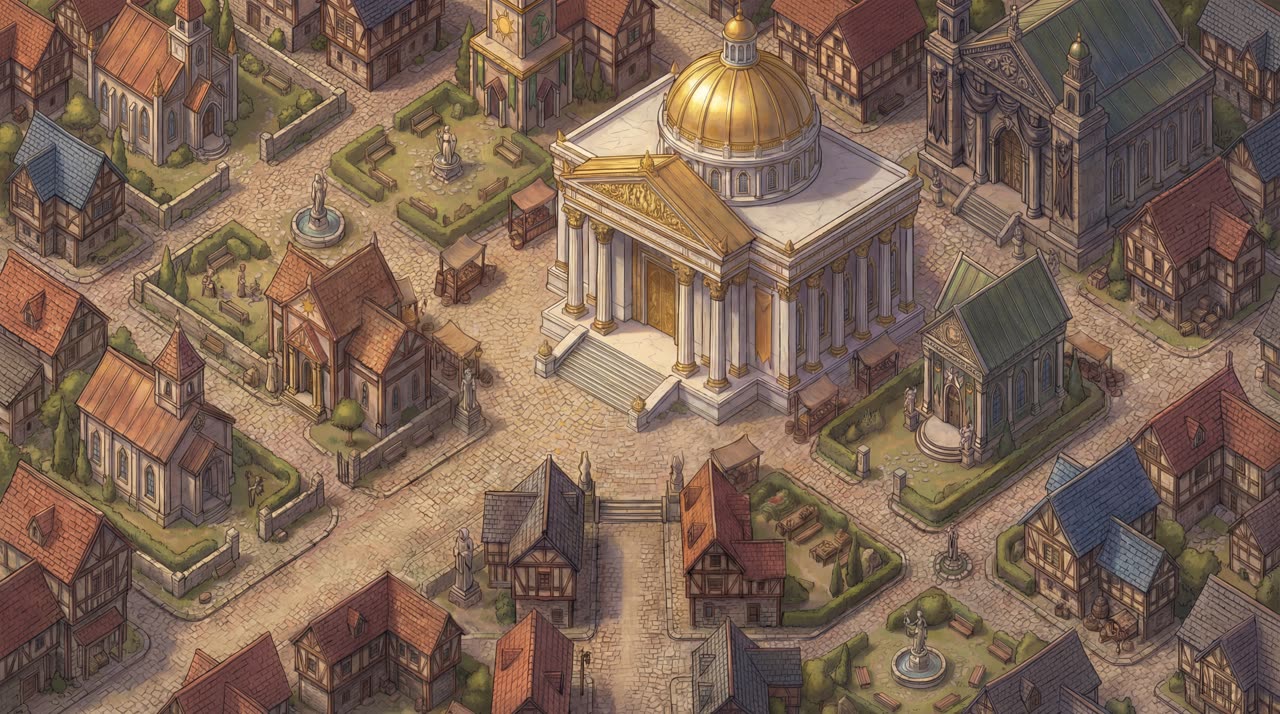
Camera angle and scale are pinned at the blueprint-to-composite step, not left to adjectives in a prompt. Canvas dimensions in feet, plus an orthographic top-down lock, apply to every cast and every variation — the temple district below stays a temple district, never a continent.
Trope 06
Prompt roulette
What it looks like
Rerolling ten times to fix one bad hallway, and watching the other nineteen good rooms change too. Every regeneration is a new gamble, not a fix.
Why it happens
Prompt-to-image generation keeps no persistent, editable intermediate state. You’re not revising the map — you’re throwing the dice again and hoping the parts you liked survive.
How the blueprint stops it
The blueprint is the persistent layer. Change one region’s mood or contents and recast, and only that region repaints — same footprint, same doors, same untouched rooms around it. The Grand Menagerie’s three variations below are exactly that: one blueprint, painted three times, with nothing left to chance between casts.
The contract
Regions, connections, materials, scale. Locked before a single pixel is painted.
That's the whole trick. Not a bigger model — a contract the model has to sign before it casts.
Coming soon